| Weight | 8 g |
|---|---|
| Dimensions | 38 × 34 cm |

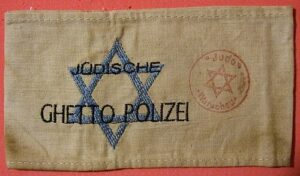
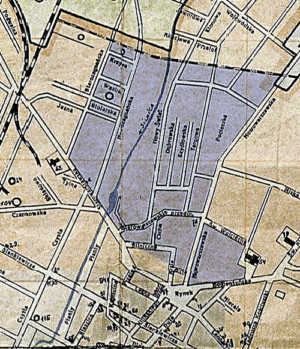
Kielce Ghetto Police
$250.00
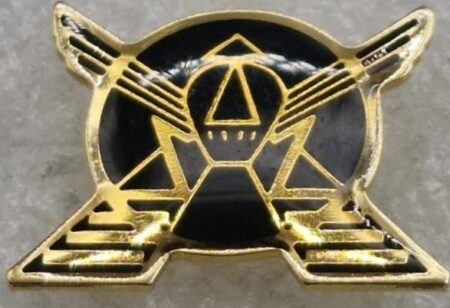
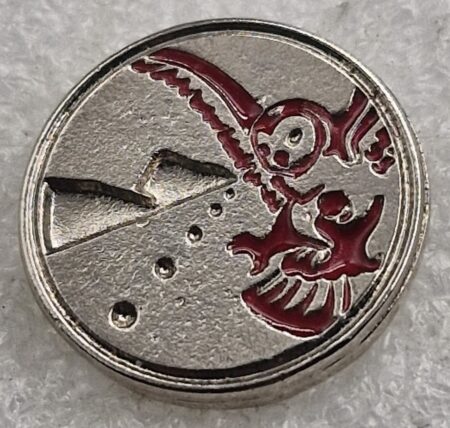
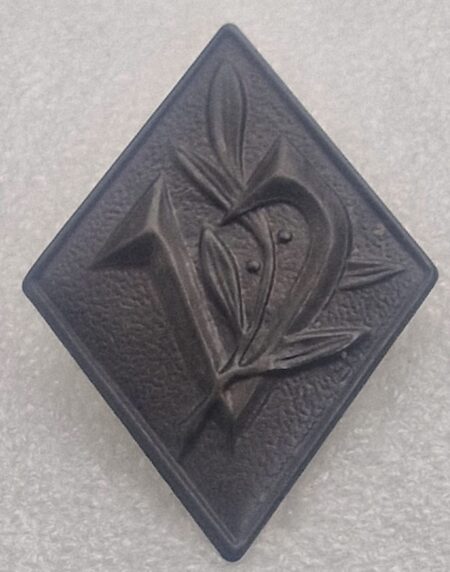
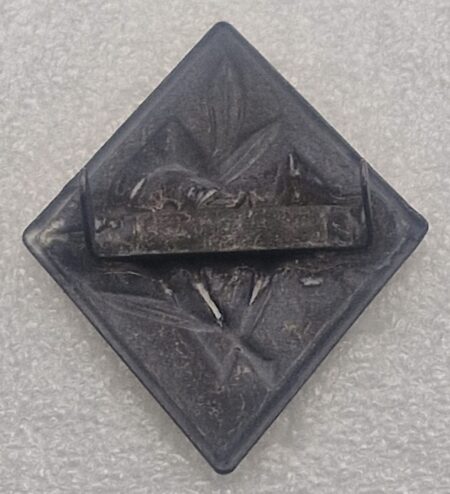
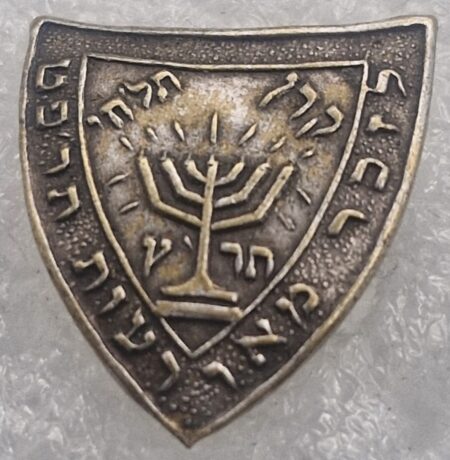
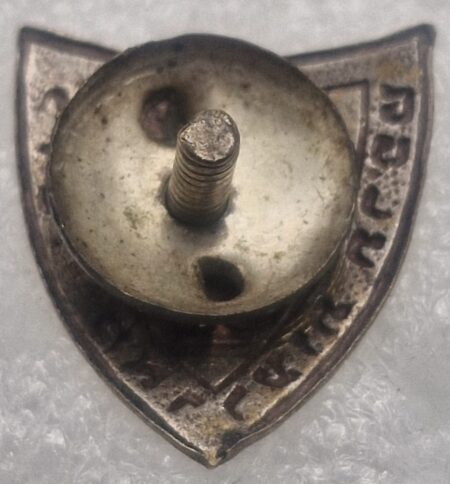
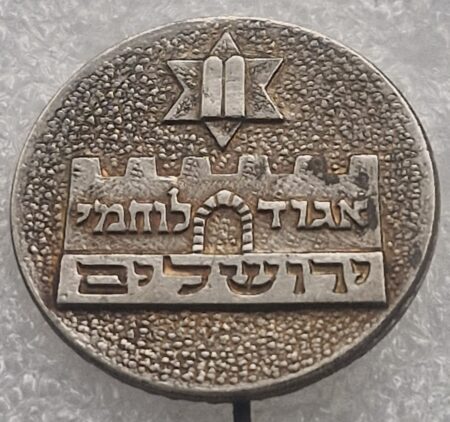
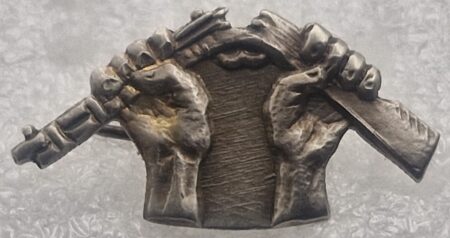
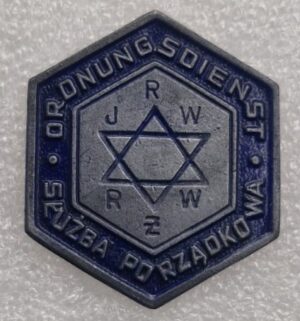
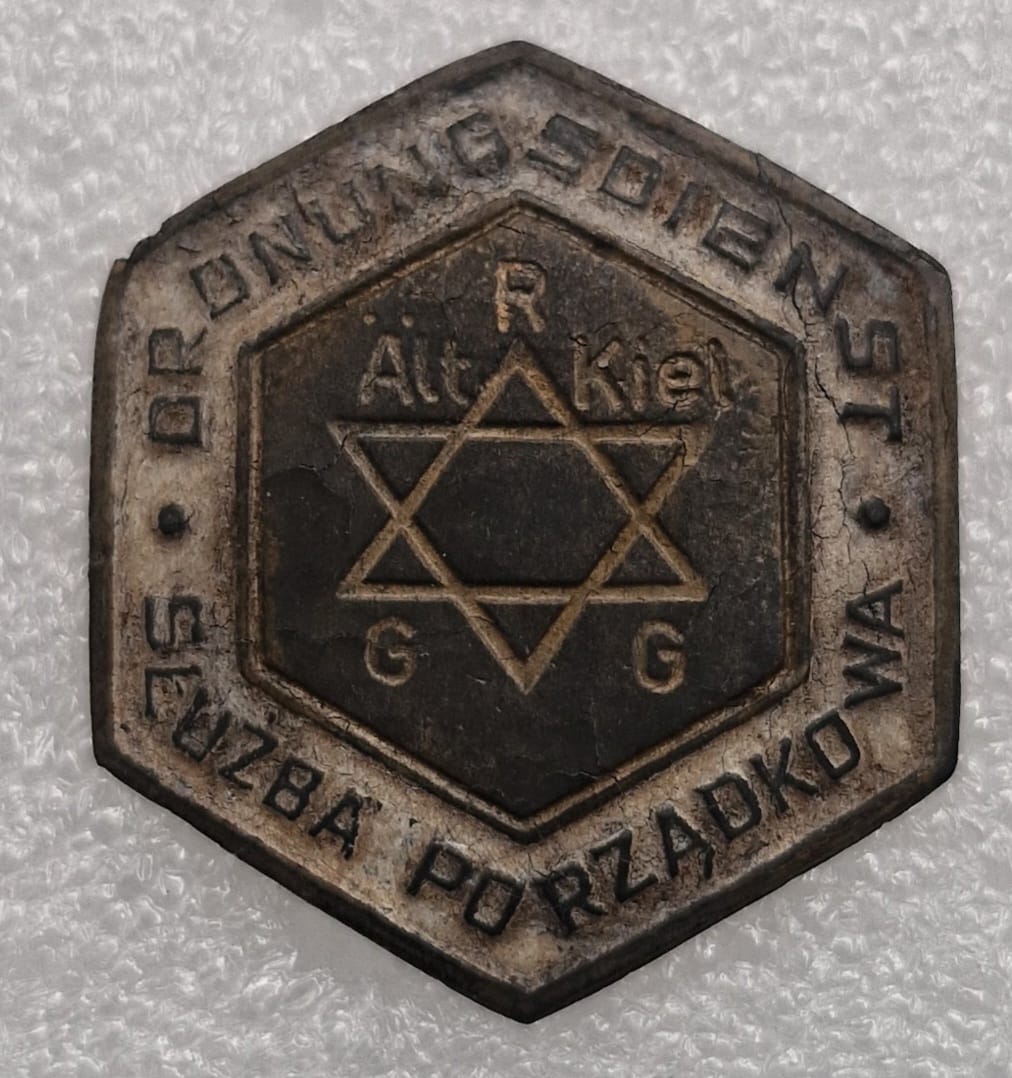
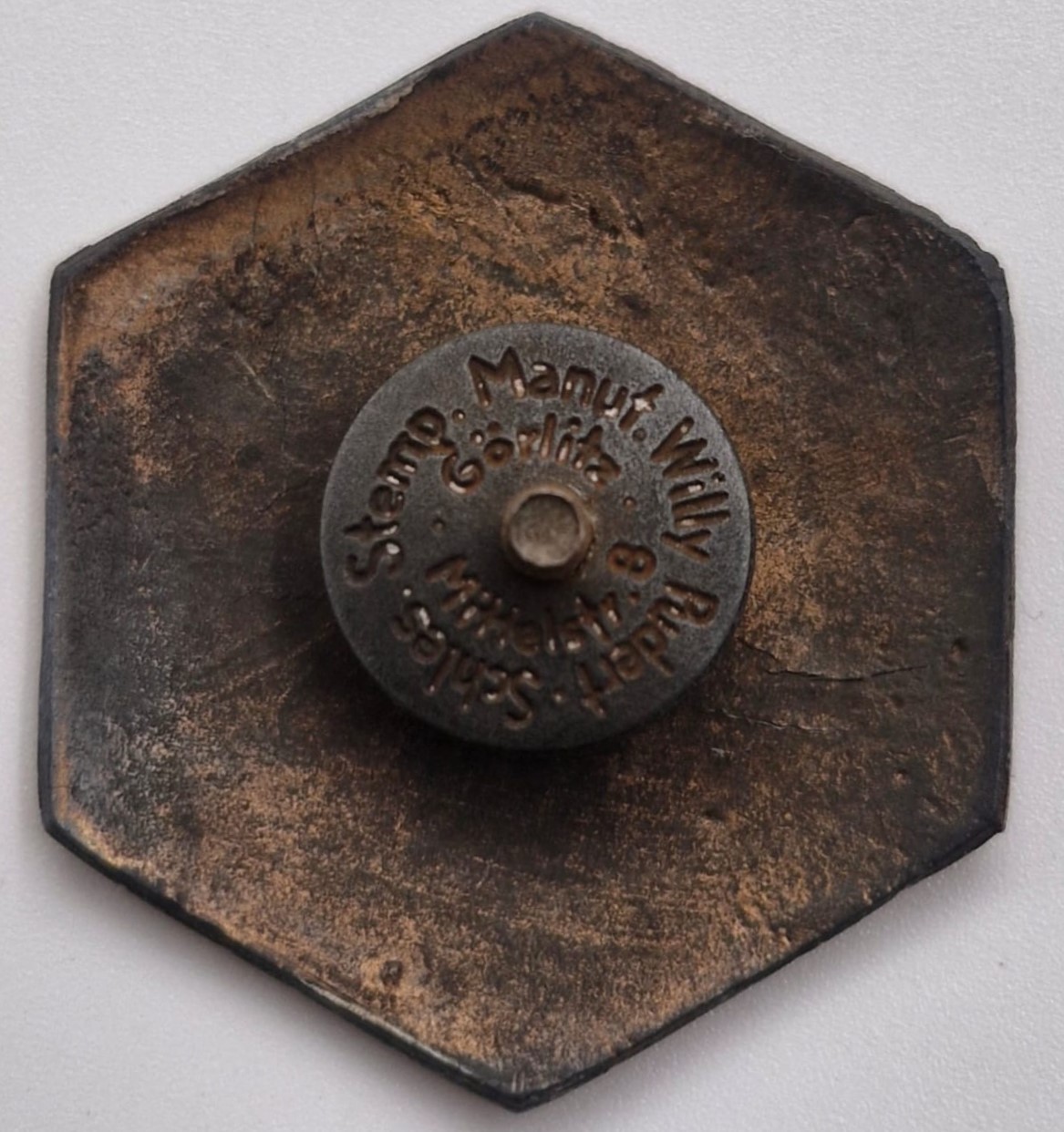
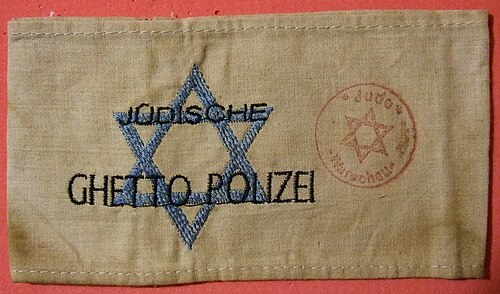
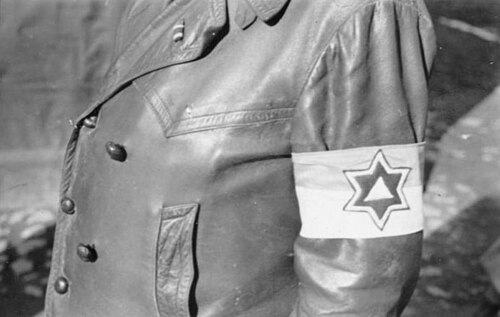
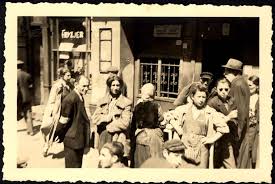
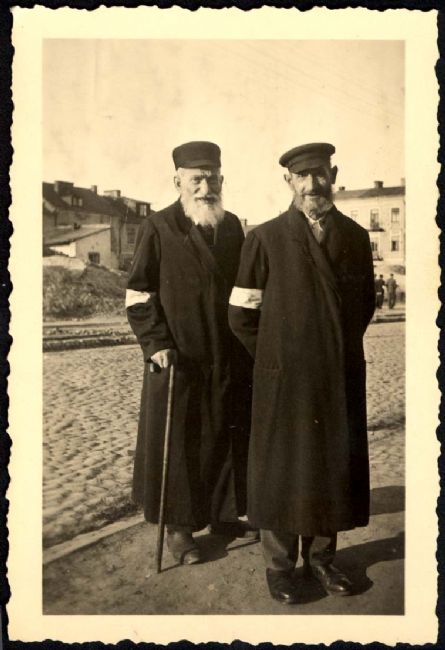
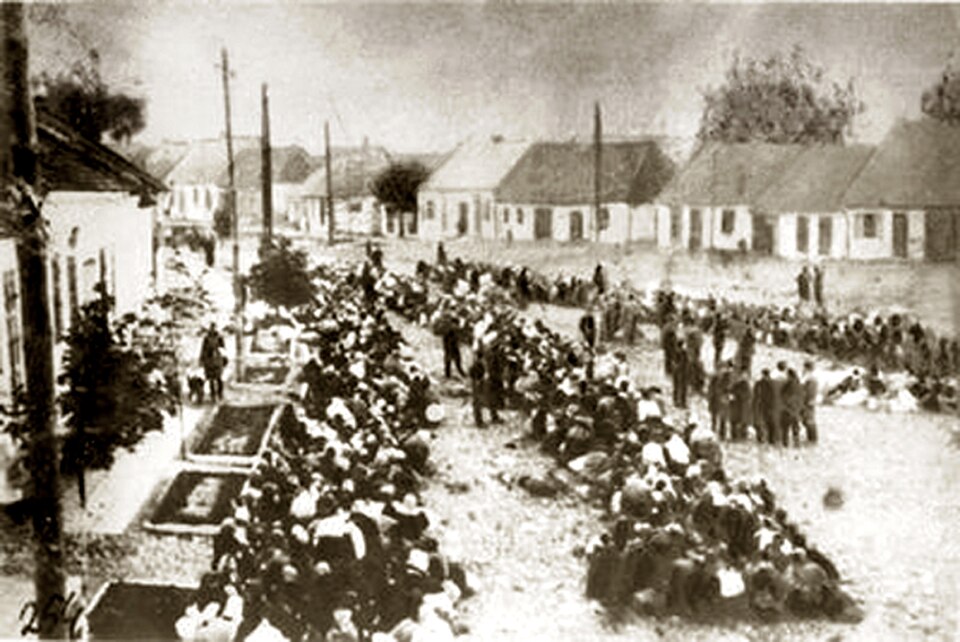
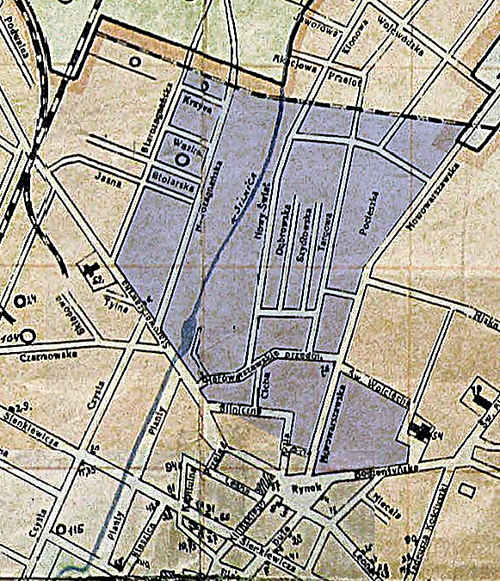
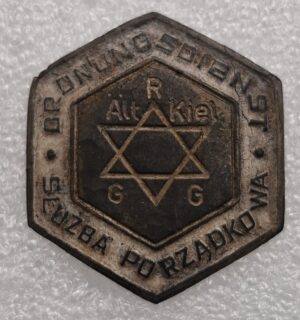
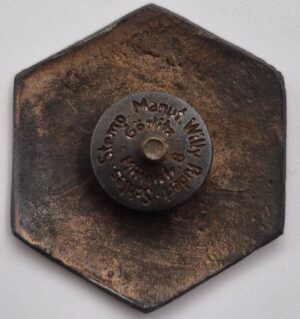
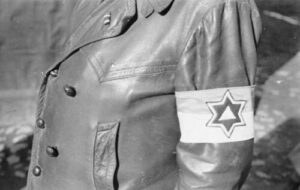
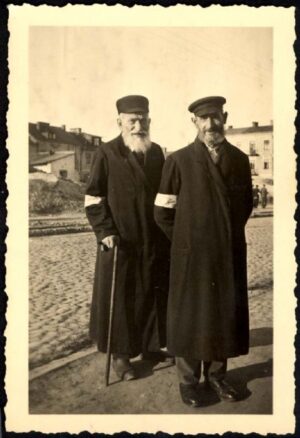
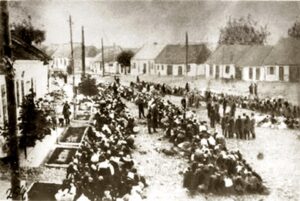
Jewish Order Service – Jüdischer Ordnungsdienst The hat and uniform insignia of the Kielce Ghetto Police were an integral part of the identification system imposed on Jewish police officers by the Nazi authorities In most of the large ghettos in occupied Poland (the Generalgouvernement), including Kielce and nearby Częstochowa, the Nazis and the Judenrat used workshops and licensed engravers (mainly in Warsaw) to produce official and uniform metal insignia The official insignia worn by police officers on their hats was a hexagonal metal insignia, usually made of brass or light metal, with a screw behind it that allowed it to be fastened to the front of the hat A Star of David was embossed in the center of the hexagon. On the upper and lower edges of the emblem appeared a bilingual inscription in block letters In German: ORDNUNGSDIENST (Order Service), in Polish: SŁUŻBA PORZĄDKOWA (Polish/Local Order Service). Religionsverband .altestenrat = judenrat Kielce getto glowne abbreviation of R ALT KIEL G G Utic Ghetto Main G.G. : Alongside the hexagonal cap emblem, the policemen in Kielce wore a special visor cap, and wore a yellow (or blue-and-white) armband on their arm with the policeman’s personal number and the name of the ghetto written on it, and sometimes a small round metal badge on the lapel of the clothing. Their duties included maintaining order in the ghetto, enforcing the German instructions, enforcing the curfew, supervising the distribution of food, and guarding the gates and preventing smuggling. The police chiefs were Singer: A refugee from Vienna, he was the first chief of the ghetto order service. After being deported to Auschwitz, he was replaced by Kaltwasser. Bruno Schindler: Appointed chief of the police in 1942. Wahn Spiegel: Another chief who maintained good relations with his German superiors. He became notorious for turning over to the Gestapo a Jewish underground that was trying to produce weapons in the workshops: in May 1941, about 85 policemen served in it, and by early 1942 their number had increased to about 120. : The police were required to enforce harsh decrees, and in many cases even helped organize the Jews for their transport to the extermination camps, with some of its chiefs even thwarting attempted uprisings. In August 1942, the Nazis began the liquidation of the ghetto. During the Aktions, Jewish police officers were required to help gather residents and direct them to the Umschlangenplatz (deportation points) on their way to the Treblinka extermination camp After most of the Jews of Kielce were deported to Treblinka in August 1942, about 1,500 Jews remained in the ghetto, including about 60 children – all of whom were children of Jewish police officers. The head of the police service during this period was Gustav Spiegel, a refugee from Vienna. He became the most powerful man in the ghetto, assumed the powers of the Judenrat, and collaborated closely with the Nazi regime. Spiegel is a complex and historically controversial figure, as it is claimed that in the labor camps (such as the “Henrykow” factory) he treated his people well but reported to the Gestapo about attempts at resistance and underground activities.
https://en.wikipedia.org/wiki/Kielce_Ghetto
Length: 38 mm | Width: 34 mm
Weight: 8 g
In stock