
| Weight | 3 kg |
|---|---|
| Dimensions | 23 × 23 cm |


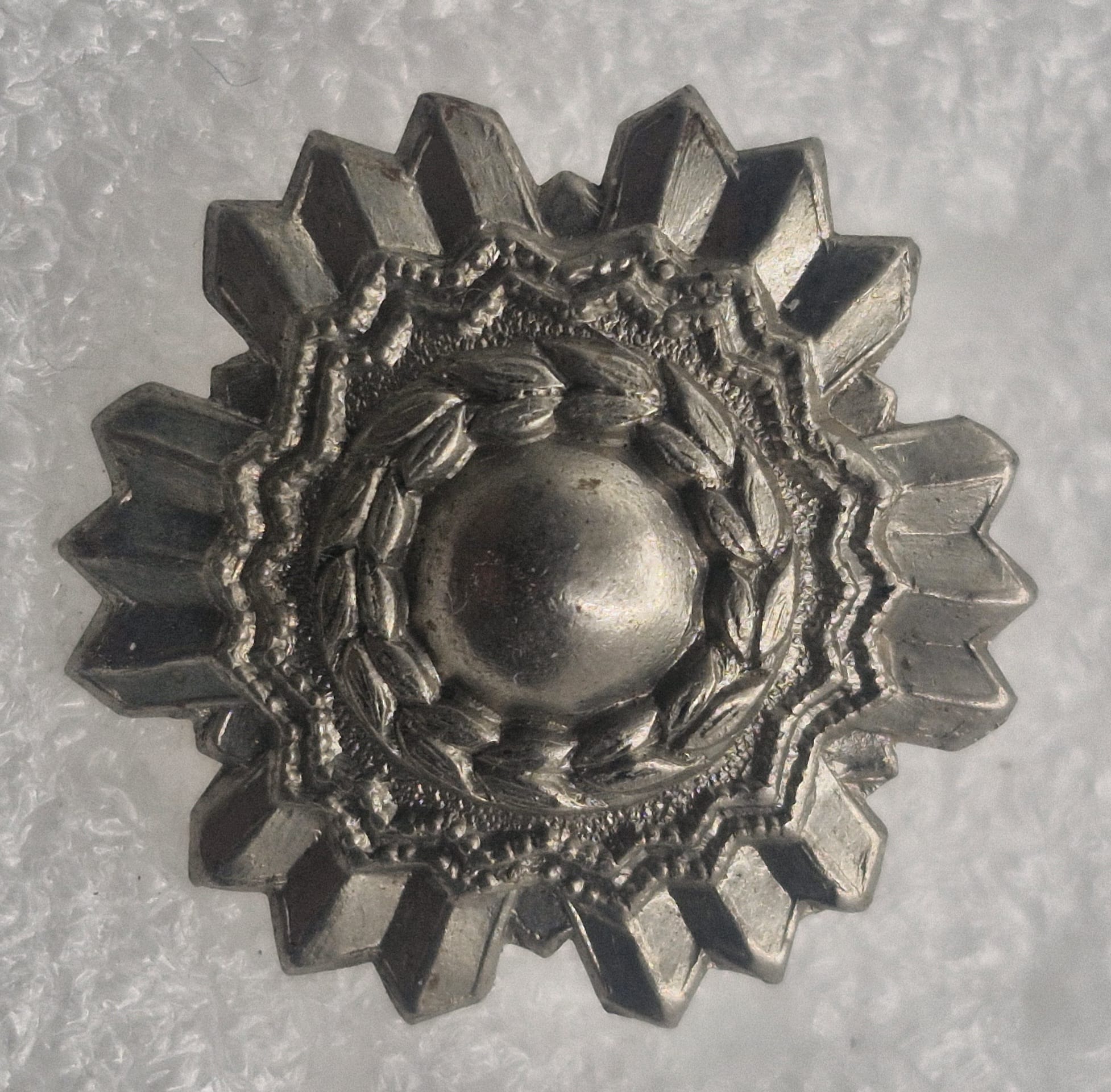
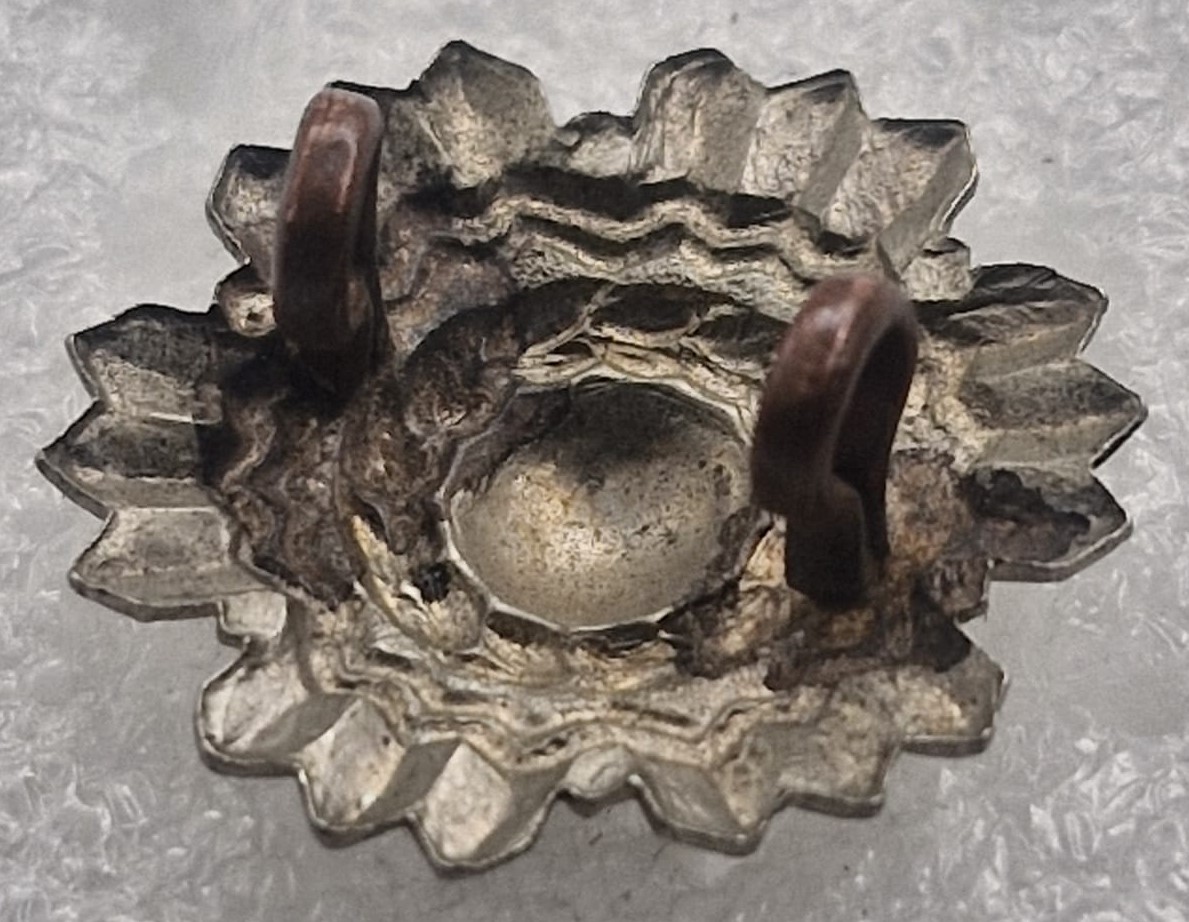
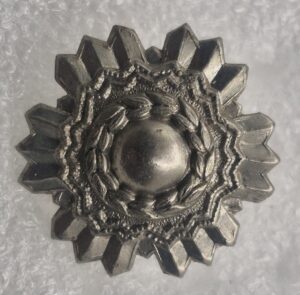
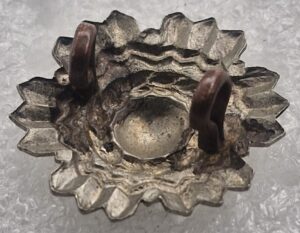
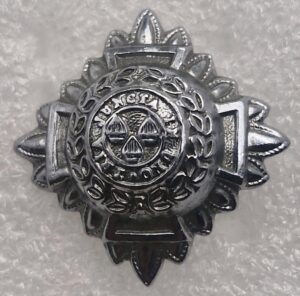
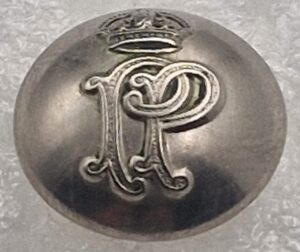
British Mandate Palestine Police Officer rank “pips” for junior and local officers
$10.00
https://en.wikipedia.org/wiki/Palestine_Police_Force
officer ranks “pips” of british palestine police
The Palestine Police Force had a rank structure based on the British colonial model. Ranks were divided into three main groups: Superior Officers, Inspectors and Other Ranks.
Characteristics of the Star
- Design: The star is based on the eight-pointed “Bath” cross, with a circle in the center surrounded by a laurel wreath.
- The item in the picture is an officer’s star (known as the “Bath Star”, or popularly known as “Pips”) which was used as a rank insignia in the British Mandate Police.
- Design Identification: This is an eight-pointed star, with a circle in the center surrounded by a laurel wreath.
- Material: The stars were usually issued in “White Metal” for the police.
- How to wear: The stars were worn on the epaulettes of the officers’ uniforms, either separately or in combination with the King’s Crown, to indicate different ranks.
In the Mandate Police rank structure, the number of stars and the combination with the crown determined the rank:
This is an original item of the officer insignia used in Israel until 1948.
The star (sometimes called “pips”) was incorporated in various quantities, and for higher ranks the crown symbol was added above it (during the Mandate it was the King’s Crown).
Examples of officer rank combinations
In the British system, rank insignia were worn in ascending order from the shoulder towards the neck:
Senior ranks (combination of crown and star)
As the officer rose in rank, the crown insignia was added. For example, a crown above one star represented a higher rank than three stars alone
Table of rank insignia (on the shoulder strap)
Rank in the Mandate Police Rank insignia
Assistant Inspector (Assistant Inspector) one star 🛡️
Inspector (Inspector) two stars 🛡️🛡️
Assistant Superintendent (ASP) three stars 🛡️🛡️🛡️
Deputy Superintendent (D.D.S.P) crown above one star 👑🛡️
District Superintendent (D.S.P) crown above two stars 👑🛡️🛡️
In the Mandate Police uniform,. The ranks were also sometimes combined with metal “Shoulder Titles” bearing the inscription PALESTINE POLICE.
This is a “Pip” – the most familiar rank insignia of officers in the British Mandate Police Force. The item in the picture is a model of the “Bath Star”, based on the emblems of the British Order of the Bath.
- Laurel Wreath: The crowns and motto are surrounded by a wreath of laurel leaves, an ancient Roman symbol of military glory and victory.
. These stars were worn on the epaulettes (epaulettes) of officers:
The pips of the police in Israel were usually made of white metal,
The distinction between the two types of “stars” is very important for understanding the structure of the Mandate Police, as it reflects the separation between the different ranks in the force:
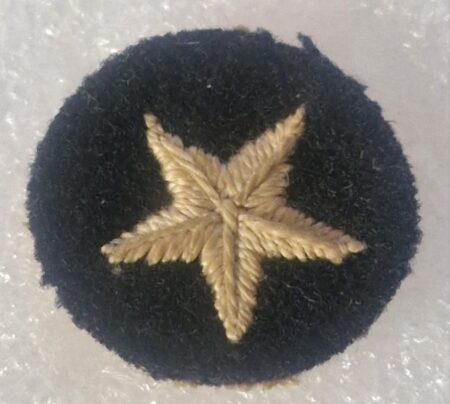
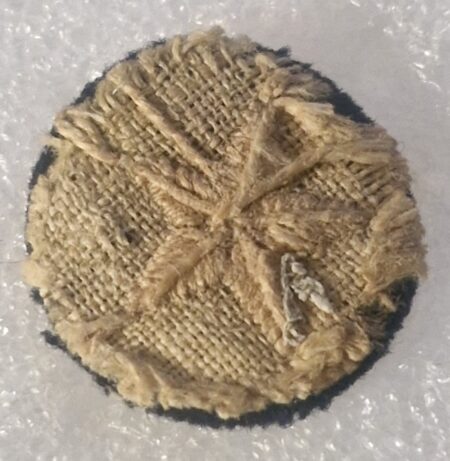
The “plain” star for junior and local officers
This is an eight-pointed star without the Latin inscription in the center, and sometimes in a flat or simpler design.
- Who used it: Mainly local officers (Jews and Arabs) in the ranks of Inspectors.
- When: Mainly during periods when it was necessary to visually distinguish between the “British staff” and the “local staff” (Palestine Secondary Branch).
- Meaning: The local inspectors formed the link between the senior British officers and the police in the field. Their ranks (Inspector and Assistant Inspector) were indicated by one or two stars, but these were not always with the magnificent Latin decoration of the senior British officers.
Summary of the differences:
Characteristic “Bath Star” Star with “simple” star inscription / police pips
Rank of senior officers (Superior Officers) Inspectors
Origin of the officer is usually local British (Jewish/Arab) or British with the rank of inspector
Symbolism Direct connection to British military tradition Local/functional police rank
Metal color High-quality white metal (White Metal) White metal, sometimes in simpler production
Interesting point: With the establishment of the Israel Police in 1948, it was decided to continue using the eight-pointed star as an officer’s rank, but the Latin motto “Tria Juncta in Uno” was removed from it and an olive leaf symbol or a cleaner design was inserted in its place, to remove the British Christian symbols.
This is an original item of the officer’s insignia that was used in Israel until 1948.
officer ranks “pips” of british palestine police
Length: 23 mm | Width: 23 mm
Weight: 3 g


Reviews
There are no reviews yet.